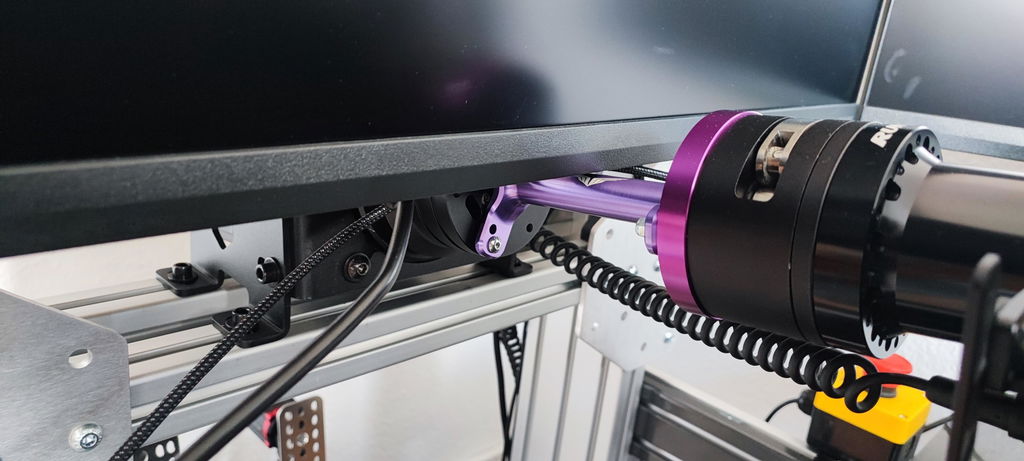
In the realm of sim racing, where immersion dictates experience, one element stands as the foundation of realism: the Field of View. It is the bridge between the virtual and the tangible, the parameter that determines how deeply a driver becomes one with the simulator, sculpted by two defining factors alone — the distance of the eyes from the screen, and the height at which the screen meets them. Yet in every racing setup that has ever existed, this truth has been left half-answered, hampered by design constraints, by misalignment, by an inability to finely tailor a position that only the individual driver could ever define for himself. This limitation fractures immersion. It leaves the sim racer forever at a remove, unable to know the raw authenticity of the track as it was meant to be known.
And yet, for as long as the sport has existed, no one thought to look for the answer where it truly resided. FOV was treated as a matter of software, of settings, of compromise negotiated on a screen — never once as a matter of architecture, of the physical relationship between driver, wheel, and world. The extension, in particular, was never considered a candidate for the solution. It was hardware in the truest, most limited sense: a length of metal bought for clearance, asked only to occupy space, never once asked to resolve anything at all. A question this fundamental deserved an answer this overlooked.